
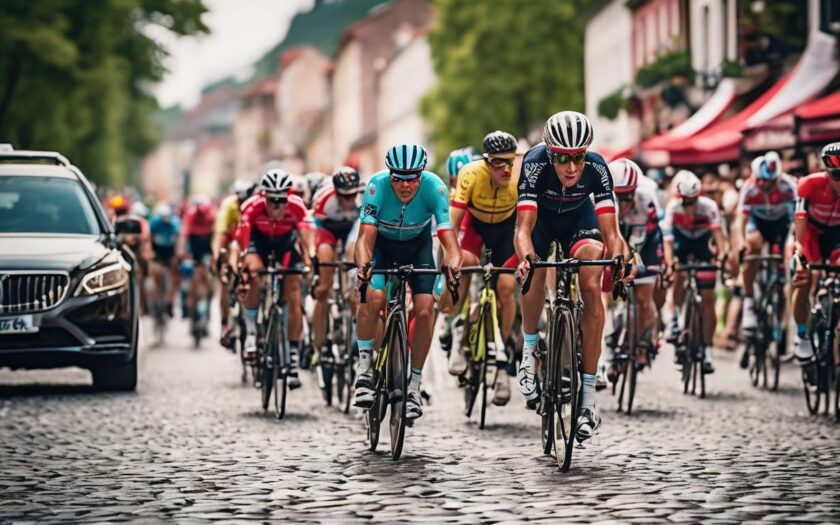
When we delve into the captivating world of professional cycling, we often find ourselves drawn into the debate of Grand Tours versus Classics. These two pillars of the sport, each with its own rich history and unique challenges, fuel a rivalry that captivates both die-hard fans and casual observers alike.
As we explore the nine key differences that set them apart, we aim to unravel the complexities that make each race format a distinct test of endurance, strategy, and sheer willpower.
Grand Tours:
-
Duration:
- Grand Tours are grueling three-week events.
-
Demands:
- They require consistency and resilience over a variety of terrains.
-
Skill Sets:
- Success in Grand Tours demands endurance and the ability to recover quickly over multiple stages.
Classics:
-
Duration:
- Often one-day races.
-
Demands:
- Require explosive power and tactical precision.
-
Skill Sets:
- Success in Classics is about quick decision-making and maximizing performance in a single day.
Together, let us navigate through the nuances of these iconic events, appreciating the diverse skill sets required and the stories of triumph and heartbreak that unfold on the roads.
Join us as we pedal through the contrasts that define these cycling spectacles.
Race Format
Grand Tours and Classics differ significantly in race format, with the former spanning multiple weeks and the latter typically lasting just a single day. In the world of cycling, these distinctions create a unique rhythm and challenge for both competitors and fans.
Grand Tours:
- Examples include the Tour de France, Giro d’Italia, and Vuelta a España.
- Require endurance, strategy, and a deep commitment over 21 days.
- It’s a test of consistency, where each stage offers new variables and the opportunity to climb the leaderboard.
Classics:
- Races like Paris-Roubaix and the Tour of Flanders.
- Condense the thrill and intensity into a single day.
- Demand immediate tactics and raw strength.
- Celebrate cycling’s explosive side, where every moment counts.
As cycling enthusiasts, we appreciate how both formats offer a sense of belonging to a community that thrives on the diverse challenges and camaraderie inherent in both Grand Tours and Classics.
Terrain Variety
In the world of competitive cycling, the diverse terrain each race offers profoundly influences the strategies and skills required to succeed. Grand Tours and Classics each demand unique approaches due to their distinct courses.
Grand Tours, like the Tour de France, take cyclists through varied landscapes over multiple stages. Riders face:
- Mountain ranges
- Flat sprints
- Everything in between
This variety requires cyclists to adapt continually, allowing climbers, sprinters, and all-rounders to shine in their moments.
Classics, on the other hand, often feature shorter, intense routes with specific terrain challenges. Famous races such as:
- Paris-Roubaix
- Tour of Flanders
These events are notorious for their cobbles and rolling hills. These one-day races require cyclists to harness their skills on specific terrain, often pushing their limits in unpredictable weather conditions.
As cycling enthusiasts, we appreciate how both Grand Tours and Classics test our versatility and technical prowess. Embracing this diversity strengthens our bond with the cycling community, where every race feels like a shared experience.
Endurance vs Power
Endurance and power play crucial roles in determining a cyclist’s success, with each type of race demanding different balances of these attributes.
In Grand Tours, we need to harness endurance over weeks of grueling stages. It’s about sustaining effort, day after day, across diverse terrains. We support each other through mountain ascents and long time trials, relying on a deep reservoir of stamina to carry us through.
Classics, however, call for bursts of raw power and strategic precision. These one-day races reward those who can unleash explosive energy at the right moment. The Classics demand we stay sharp and ready, as the opportunity for victory can appear suddenly and vanish just as quickly. Here, power is paramount, often deciding the race in a single decisive move.
In cycling, whether conquering the vast expanse of a Grand Tour or the intense challenges of the Classics, we share the roads, the trials, and the triumphs. Together, we find our balance.
Recovery Time
In the world of competitive cycling, recovery time varies significantly between the grueling multi-week schedule of Grand Tours and the intense, single-day demands of the Classics.
Grand Tours test riders’ endurance over three weeks, requiring them to manage energy and recover each day to remain competitive. The daily stages mean a focus on quick, efficient recovery strategies is essential. Key recovery approaches include:
- Nutrition
- Massage
- Rest
These strategies are crucial to keep riders at peak performance.
In contrast, Classics demand a different approach. These one-day races require explosive power and all-out effort. As a result, riders often experience sore muscles and fatigue that can take longer to dissipate. Since Classics lack day-after-day demands, riders can allow for a more extended recovery period after each race.
Nonetheless, maintaining fitness between races is essential for remaining competitive throughout the cycling season.
Balancing these recovery needs helps riders thrive in both arenas.
Strategic Thinking
Strategic Thinking in Cycling
Grand Tours:
In Grand Tours, strategic thinking is crucial for navigating three grueling weeks of varied terrains and unpredictable weather. Key aspects include:
- Managing energy wisely to ensure consistency and endurance.
- Implementing teamwork, where each rider has a specific role:
- Protecting the lead rider.
- Maintaining a strong position.
Classics:
In contrast, Classics require a different mindset due to their one-day race format. Key strategies include:
- Making quick, decisive moves.
- Seizing opportunities with no room for error.
- Relying on well-timed attacks or savvy navigation through the peloton for victory.
Unified Goal:
Despite the differences in approach, both Grand Tours and Classics share a common strategic goal:
- Crossing the finish line victorious.
- Strengthening our bond through camaraderie and shared experiences in the cycling world.
This strategic thinking unites us, whether tackling the long haul of a Grand Tour or the intense burst of a Classic.
Emphasis on Tactics
Tactics play a pivotal role in determining our success, demanding precision and adaptability in each race scenario. Whether we’re tackling the expansive journey of a Grand Tour or the intense burst of a Classic, our approach to cycling changes dramatically.
In Grand Tours:
- We meticulously plan over three weeks.
- Gauge when to conserve energy or launch decisive attacks.
- Foster a shared sense of camaraderie and resilience among our team.
In contrast, Classics require:
- Being sharp and assertive from the get-go.
- Making immediate decisions and quick reflexes.
- Uniting as a team, relying on mutual trust and shared instincts.
Key Points in Classics:
- Each moment counts.
- Navigating unpredictable terrain.
- A tactical misstep can be costly.
Our passion for both Grand Tours and Classics bonds us, as we embrace the unique challenges and tactical nuances each race presents.
Physical Demands
The Physical Demands of Cycling Races
The physical demands of these races test our endurance, strength, and resilience to their limits. In the world of cycling, Grand Tours and Classics each present unique challenges that forge a special bond among us who brave them.
Grand Tours push us over three rigorous weeks, demanding relentless stamina and mental toughness. We ride through diverse terrains and ever-changing weather, with each day adding to our shared story of perseverance.
Classics, on the other hand, condense their demands into a single day of intense effort. These races require:
- Explosive power
- Acute focus
As we navigate cobblestones, steep climbs, and unpredictable paths, the Classics offer a different kind of camaraderie, built on the shared experience of short-lived, yet fierce, battles.
Both styles of racing connect us through the physical challenges we face. Whether it’s the marathon of a Grand Tour or the sprint of a Classic, we find unity in the suffering and triumph that cycling brings us.
Historical Significance
Throughout the decades, we’ve seen how these iconic races have shaped the sport’s evolution and captured the imagination of fans worldwide. Grand Tours and Classics each hold a unique place in cycling history.
Grand Tours, with their epic three-week journeys across diverse landscapes, have become symbols of endurance and strategy. Events like the:
- Tour de France
- Giro d’Italia
- Vuelta a España
are more than races; they’re cultural phenomena that unite us, drawing millions into their narrative each year.
Classics, on the other hand, are the heart and soul of one-day racing. They remind us of cycling’s roots, with races like:
- Paris-Roubaix
- Tour of Flanders
steeped in tradition and lore. These events have witnessed legendary rivalries and heroic feats, leaving an indelible mark on the cycling community.
Both Grand Tours and Classics offer us a connection to the past, allowing us to be part of a timeless legacy that continues to inspire passion and camaraderie among fans.
What are some famous examples of cyclists who have excelled in both Grand Tours and Classics?
Some cyclists have truly shined in both Grand Tours and Classics. Their versatility is impressive, as they demonstrate the ability to handle both the long stages of Grand Tours and the intensity of one-day Classics.
It’s a rare skill set that requires immense strength and strategy. These riders are truly legends of the sport, leaving a lasting impact on cycling history with their incredible performances in both types of races.
Key attributes of these versatile cyclists include:
- Strength: The physical endurance to compete in extended races.
- Strategy: The tactical acumen to navigate diverse race conditions.
- Versatility: The ability to adapt to various race formats and terrains.
Their achievements highlight the unique blend of skills required to excel at the highest level in both Grand Tours and Classics.
How does fan engagement differ between Grand Tours and Classics?
In our experience, fan engagement between Grand Tours and Classics varies due to the nature of the races.
Grand Tours, like the Tour de France, often attract a broader global audience. This is due to their:
- Three-week format
- Epic mountain stages
Classics, such as the Paris-Roubaix, may draw in more passionate local fans. These fans appreciate:
- The history
- The intensity of the one-day races
Both types of races offer unique opportunities for fans to connect with the sport.
What role do team dynamics play in a cyclist’s decision to focus on Grand Tours vs Classics?
Team Dynamics in Cycling
Team dynamics play a crucial role in shaping a cyclist’s focus on Grand Tours or Classics. We rely on strong bonds and communication within our team to make strategic decisions about our racing calendar.
Key Aspects of Team Dynamics:
- Balancing individual goals with team objectives is essential.
- The support and collaboration among teammates influence our choices.
Ultimately, our unity and shared vision guide us towards selecting the races that align best with our team dynamics.
Conclusion
In conclusion, when comparing Grand Tours to Classics, the differences that matter lie in several key areas:
-
Race Format: Grand Tours span multiple weeks, while Classics are intense one-day races.
-
Terrain Variety: Grand Tours cover a wide range of terrains, whereas Classics often focus on specific types.
-
Endurance versus Power: Grand Tours test endurance over time, while Classics demand peak power in a shorter duration.
-
Recovery Time: Grand Tours require sustained recovery strategies, unlike the single-day recovery needed for Classics.
-
Strategic Thinking: The extended length of Grand Tours allows for evolving strategies, while Classics often involve fast, decisive tactics.
-
Emphasis on Tactics: Grand Tours demand long-term tactics, whereas Classics focus on immediate, high-impact decisions.
-
Physical Demands: Grand Tours challenge long-term stamina, while Classics require short bursts of extreme energy.
-
Historical Significance: Both types of races hold rich traditions and histories that contribute to their prestige.
These distinctions shape the unique challenges and experiences that make each type of cycling event truly special. Whether you prefer the grueling three-week test of a Grand Tour or the intense one-day battles of a Classic, both offer their own rewards for riders and fans alike.