
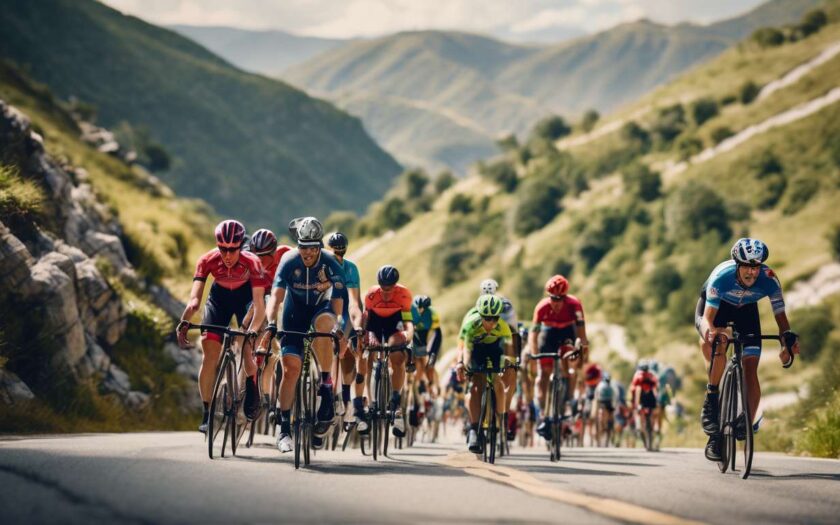
In the world of professional cycling, grand tours represent the ultimate test of endurance, strategy, and team dynamics. These events unfold over weeks of grueling stages, where every decision can make or break a team’s quest for victory.
Key Takeaways on Team Tactics in Grand Tours:
-
Meticulous Team Effort
Behind every individual triumph lies a meticulously planned team effort. The collective experience on the road showcases how essential teamwork is to success. -
Strategic Deployment of Domestiques
Domestiques play a crucial role in supporting the team leader, providing protection from the wind, and fetching food and water. Their strategic deployment can influence race outcomes significantly. -
Crucial Moments of Leadership and Sacrifice
Leadership in the peloton is about making the right calls at the right time. Often, this involves sacrifice, where a rider might forgo personal glory for the team’s benefit. -
Team Dynamics
The intricate dance of team dynamics is essential, where communication and understanding among team members can lead to successful execution of race strategies.
Exploring the Essence of Teamwork:
-
Endurance and Strategy: Grand tours test not just physical stamina but also the strategic acumen of teams.
-
Tactics That Define Outcomes: Successful teams understand how to deploy tactics effectively, whether it’s a breakaway strategy or controlling the peloton’s pace.
By examining these elements, we gain insight into what truly sets champions apart in the prestigious arena of cycling grand tours. Join us as we unravel the complexities of teamwork in the peloton, highlighting the strategic nuances that define cycling’s most prestigious events.
Team Strategy and Coordination
Effective Team Strategy and Coordination
Effective team strategy and coordination are crucial for securing victory in Grand Tours. We’ve seen time and time again how the collective strength of a team can outshine individual prowess. It’s all about understanding each other’s strengths and weaknesses and harnessing them for the greater good. When we work together, our strategies come to life, creating a seamless symphony of effort and precision.
Strategy Development
We build our strategy around our goals, always considering the unique dynamics of each Grand Tour stage.
Coordination
Coordination is the glue that holds our plans together. It ensures that every rider knows their role and executes it with precision.
Communication
Communication is our lifeline; it keeps us connected and synchronized, even when the race gets tough.
Teamwork
In the heat of competition, it’s our teamwork that sets us apart. We’re not just a group of individual cyclists; we’re a united front, pushing towards a common goal. Together, we create magic on the road.
Importance of Team Support Roles
Support roles in a cycling team often make the difference between a podium finish and a missed opportunity. Behind every successful team leader stands a group of unsung heroes whose teamwork and dedication keep the strategy on track. Their coordination ensures every rider is in the right place at the right time, helping navigate the unpredictable terrain of a Grand Tour.
As we pedal through each stage, our team’s strategy hinges on seamless cooperation. Support riders, or domestiques, perform several critical tasks:
- Bring water
- Protect from wind
- Set the pace
These actions create an environment where the leader can thrive. It’s not just about individual strength; it’s about collective effort.
When we function as a cohesive unit, we create a bond that transcends the race itself, a feeling of belonging that fuels our journey.
We thrive on the understanding that every teammate plays a crucial role, transforming our strategy into a shared victory.
Sacrifice for Team Success
Every member of our team willingly puts the collective goal ahead of personal glory, demonstrating true sacrifice for team success.
In the fast-paced world of Grand Tours, it’s our commitment to teamwork that truly makes a difference. By aligning our strategy with our shared vision, we coordinate efforts seamlessly, ensuring that each rider contributes to our overarching goals.
We understand that achieving success requires more than individual talent. It demands a unity of purpose and a willingness to support each other. When we sacrifice personal ambitions, we create opportunities for our team leaders to shine, knowing that their victories are our victories too. This selflessness fosters a sense of belonging, binding us together as we face the challenges of the race.
Our strategy involves meticulously planning each stage, knowing when to push and when to protect. By coordinating our strengths, we navigate the complexities of the tour, proving that collective effort outpaces solo endeavors every time.
Communication in the Peloton
Effective communication in the peloton is crucial for maintaining our team’s cohesion and ensuring we’re adaptable to the dynamic conditions of the race. In the heart of the peloton, our ability to relay information swiftly and clearly can make all the difference.
It’s not just about shouting instructions; it’s about creating a symphony of teamwork where each rider knows their role and feels valued. Together, we form a web of strategy, each one of us a vital thread in the tapestry of our collective success.
We rely on constant coordination, using several methods to communicate:
- Hand signals
- Radio communication
- Reading each other’s body language
This seamless interaction allows us to adjust our strategy on the fly, whether it’s covering attacks or setting up a sprint.
It’s in these moments that we truly feel the power of unity. As a team, we thrive on this connection, knowing that every word exchanged strengthens our resolve and propels us forward in our shared pursuit of victory.
Endurance and Strategic Planning
Maximizing our endurance and executing strategic planning are essential to conquering the grueling demands of Grand Tours. As a tightly-knit team, our collective strength lies in effective teamwork.
Our strategy must account for:
- Varied terrains
- Unpredictable weather
- Endurance required for each stage
By coordinating our efforts, we ensure that everyone contributes to the overall goal while preserving energy for the most critical moments.
In our quest for success, strategic planning helps us:
- Anticipate challenges
- Devise solutions before they arise
We analyze every aspect of the race, from competitors’ tactics to our own strengths and weaknesses. This foresight allows us to maintain a steady pace, protecting our lead rider and ensuring everyone plays their role effectively.
Coordination is key; we synchronize our actions to seamlessly support each other in various ways, such as:
- Shielding a teammate from the wind
- Executing a perfectly timed lead-out
Together, we transform strategy into victory.
Effective Tactical Deployments
In our pursuit of victory, we deploy a variety of precise tactics to outmaneuver our competition at critical junctures of the race.
Our success hinges on teamwork, where every rider knows their role, contributing to the collective strategy. We understand that a well-coordinated team can create opportunities that individual brilliance alone cannot achieve. Each member’s efforts are synchronized, ensuring that we maximize our strengths and exploit our rivals’ weaknesses.
Strategy is at the heart of what we do. We analyze:
- The race profile
- Weather conditions
- The strengths of our competition
to develop a plan that leverages our team’s unique abilities. Our moves are deliberate and calculated, whether it’s:
- Setting a punishing pace to tire out competitors
- Launching a surprise attack when they least expect it
Through seamless coordination, we maintain unity and adapt to the dynamic nature of the race.
Together, we ride not just for individual glory but for shared triumphs, embodying the spirit of camaraderie and collective ambition.
Leadership Decisions in Races
In the heat of competition, we rely on decisive leadership to make split-second decisions that can alter the course of the race. Our leaders, often experienced riders themselves, understand the intricacies of teamwork and strategy. They’re the glue that holds us together, ensuring our coordination is seamless.
When the pressure mounts, a leader’s ability to assess the race dynamics swiftly and adjust our strategy accordingly is invaluable. We’ve all felt the electric pulse of a race where a leader’s call to attack or defend comes at just the right moment. These decisions require a deep understanding of each rider’s strengths and the team’s overall capabilities.
A well-timed decision can mean the difference between victory and seeing it slip away. We trust these leaders because they embody the spirit and dedication that binds us as a team. With their guidance, we’re not just individual riders; we’re a cohesive unit striving towards a common goal.
Teamwork Dynamics and Success
In every race, our collective efforts and understanding of each other’s roles are critical to achieving success. Teamwork isn’t just a buzzword; it’s the heart of our strategy. We know that each member brings unique strengths, and when we coordinate effectively, we’re unstoppable. From the lead rider setting the pace to the domestiques controlling the peloton, everyone has a role that contributes to our triumphs.
Our strategy hinges on communication. We can’t rely on individual brilliance alone; it’s about how we work together.
- We plan meticulously, anticipating every challenge and opportunity.
- During the race, our coordination ensures we adapt seamlessly to the unfolding dynamics.
It’s in those moments of perfect synergy where we truly shine.
We share every victory, knowing it’s the result of our combined efforts. Together, we form a unit that supports, trusts, and pushes each other towards our common goal. In the world of grand tours, our success is a testament to the power of teamwork.
How do individual cyclists maintain motivation throughout a long Grand Tour?
To keep our motivation up during a lengthy Grand Tour, we focus on small victories each day.
By setting achievable goals, such as:
- Reaching a certain checkpoint
- Helping a teammate
We maintain a positive mindset.
Encouraging each other and staying connected as a team also plays a huge role in boosting morale.
Ultimately, our shared determination to succeed and support for one another keeps us motivated throughout the challenging race.
What are the psychological effects of competing in a Grand Tour on team members?
Competing in a Grand Tour can have profound psychological effects on team members. The intense pressure, physical demands, and strategic decisions challenge our mental resilience.
We often experience a mix of excitement, stress, and camaraderie as we work together towards a common goal.
These experiences can:
- Strengthen our bond as a team
- Push us to overcome personal limits
- Foster a deep sense of accomplishment and unity
How do weather conditions impact team tactics and individual performances?
Weather conditions play a crucial role in shaping our team tactics and individual performances during races.
When faced with rain, wind, or extreme heat, we must adjust our strategies to ensure optimal performance. These conditions can impact:
- Our pace
- Energy levels
- Overall race dynamics
Effective communication and quick decision-making are essential to adapt to the changing environment.
In the end, our ability to navigate these challenges together strengthens our bond as a team.
Conclusion
In conclusion, team tactics play a crucial role in the success of Grand Tours.
From strategic planning to effective communication, every aspect of teamwork contributes to achieving victory. Sacrifices made for the greater good and coordinated efforts within the peloton showcase the importance of collaboration in cycling races.
By understanding the dynamics of teamwork and utilizing effective tactical deployments, teams can greatly enhance their chances of triumph in the challenging terrain of Grand Tours.